
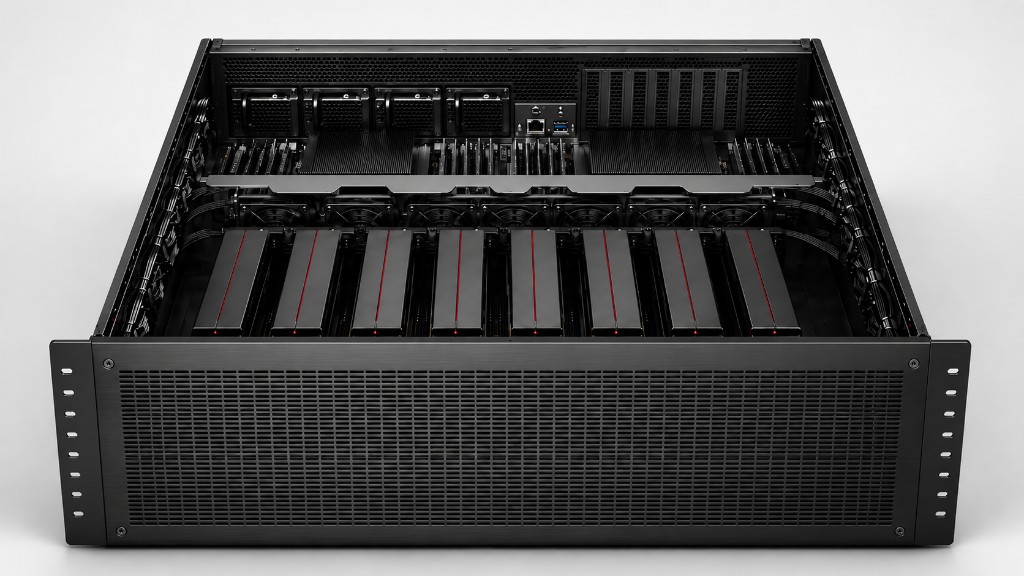
Systems
A card in a box is a support problem.
N4 and N8 ship configured, burned in, acceptance tested, and engineer-installed.
Why systems
Configured, tested, installed
Power, airflow, firmware, burn-in and acceptance each introduce variables a card in foam cannot control. Umbra nodes arrive as validated systems: not a parts bin and a manual.
Nodes are quoted per configuration. Typical programmes begin at a single evaluation card and scale to multi-node deployments.
Configurations
N4 and N8
| Umbra N4 | Umbra N8 | |
|---|---|---|
| Cards | 4 | 8 |
| Throughput | 160M ops/s estimated1 | 320M ops/s estimated |
| Wall power | ~600 W | ~1400 W |
| Form factor | 4U rack-mount | 4U rack-mount |
| Network | Dual 100 GbE | Dual 100 GbE |
| V-series ready | Yes | Yes |
| Delivery | Engineer installed | Engineer installed |
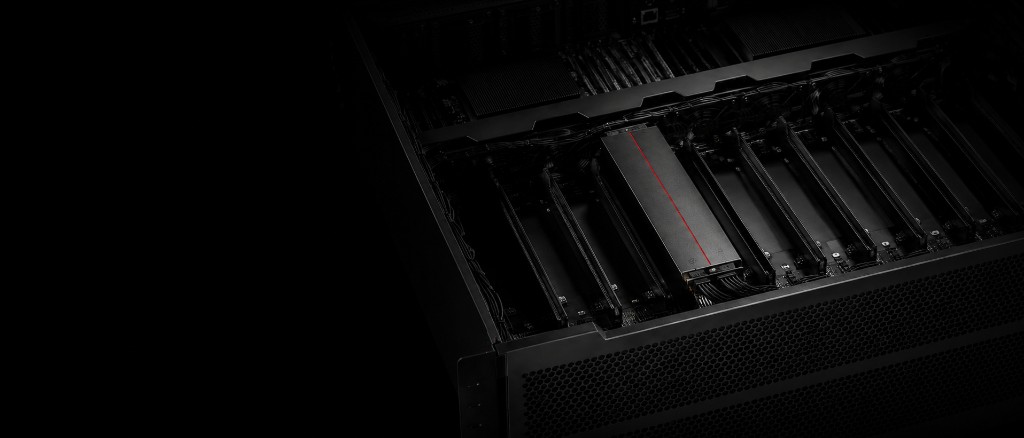
Umbra N8
Eight cards. One system.
| Accelerators | 8 × Umbra U100 |
|---|---|
| Throughput | 320,000,000 ops/s estimated1 |
| Efficiency · at wall | ~230,000 ops/s per watt3 |
| Node draw | ~1.4 kW |
| Host | Dual-socket, 768 GB |
| Storage | 2 TB boot (mirrored), 30 TB NVMe |
| Data plane | Dual 100 GbE |
| Management | Dedicated BMC, IPMI 2.0 + Redfish |
| Power | 4 × 2000 W Titanium, 3+1 redundant, dual feed |
| Cooling | Front-to-back directed airflow |
| Security | TPM 2.0, signed firmware and bitstream, chassis intrusion detection |
| Upgrade | V-series card upgrade in the same chassis, Q4 2026 |
V-ready
Provisioned for the upgrade path
Every ZipLogic node chassis is provisioned for the V-series card upgrade from day one. That claim applies to nodes purchased from ZipLogic: not to cards dropped into an underspecified host.
Roadmap →Configured systems, engineer installed.
Request a quotation for N4 or N8, or a briefing to size the deployment.
Methodology
1 Encrypted logic operations per second, measured on production silicon. Node figures estimated from measured single-card throughput.
3 N8 node wall power estimated for dual-socket host under load; efficiency derived from estimated node throughput ÷ wall power.